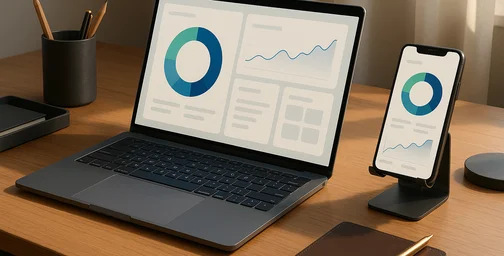
When investors search for the best portfolio tracker for stocks and ETFs, they are usually not looking for just another app.
They are looking for clarity.
At first, tracking investments can feel simple enough. A broker app gives you a basic overview. A spreadsheet can fill in a few gaps. Maybe you keep a watchlist in your notes. That often works — for a while.
Then your portfolio gets larger.
You make more trades. You hold more positions. You want a cleaner view of your allocation. You may want to track dividends. You want to separate your real holdings from the ideas you are only watching. At that point, what once felt manageable starts becoming fragmented.
That is why investors start looking for a proper portfolio tracker.
The challenge is that there is no single “best” tracker for everyone. The better question is this:
Which portfolio tracker is the right fit for the way you invest?
In this article, we will look at:
- what a good portfolio tracker should help you do,
- what to look for if you invest in stocks and ETFs,
- when basic tools stop being enough,
- and how to choose a tracker that actually fits your workflow.
What investors usually mean by “the best portfolio tracker”
Most people do not literally mean “the most famous app” or “the tool with the longest feature list.”
They usually mean something more practical:
- a tool that helps them stay organized,
- a better way to see the full portfolio,
- a cleaner place to track transactions,
- an easier way to separate a watchlist from real holdings,
- and less manual maintenance.
That is important because the best portfolio tracker is not the one with the most marketing. It is the one that solves the actual friction in your investment process.
What a good portfolio tracker should help you do
A dedicated portfolio tracker should make your investing life clearer, not busier.
1. See your portfolio as a whole
The most basic question is still one of the most important:
What do I actually own right now?
A good tracker should make that obvious.
You should be able to see:
- your holdings,
- position sizes,
- overall allocation,
- and how the portfolio is structured.
If getting that overview still feels messy, it helps to step back and think about how to track your investment portfolio without chaos in the first place.
2. Keep transaction history connected to the portfolio
A transaction list is useful, but it is not enough on its own.
A portfolio tracker should connect your trades to the current state of your portfolio so that your records actually explain your portfolio, not just your activity. If that is exactly where your current setup feels weak, read How to Track Stock Purchases and Investment Transactions Without Mess.
3. Separate your watchlist from your holdings
This matters more than many investors expect.
You should be able to keep a clear distinction between:
- what you already own,
- and what you are simply watching for later.
When those two get mixed together, clarity gets worse. If watchlist structure is part of the problem, see How to Build a Stock Watchlist Without Losing Good Investment Ideas.
4. Track dividends if they matter to your strategy
For investors who hold dividend-paying stocks or ETFs, dividend visibility is an important part of the overall portfolio picture.
You may want to see:
- where the income comes from,
- how often it arrives,
- and how it changes over time.
For a deeper dividend-specific workflow, read Dividend Tracker: How to Track Dividends and Yield Without Spreadsheets.
5. Reduce manual work
This is one of the biggest practical benefits of a dedicated tracker.
A good tool should save you time and reduce friction, not create another complicated system to maintain.
Spreadsheet, broker app, or dedicated portfolio tracker?
In reality, investors usually choose between three categories:
- spreadsheets,
- broker apps,
- and dedicated portfolio trackers.
Each one has a place.
Spreadsheets
Spreadsheets are a common starting point because they are flexible and familiar.
They work well when:
- your portfolio is still small,
- you do not mind manual updates,
- and your setup remains fairly simple.
But once your portfolio gets more complex, spreadsheets often become harder to maintain than they are worth.
If you are weighing that exact decision, it helps to compare Excel vs Portfolio Tracker: What Makes More Sense for Investors?.
Broker apps
A broker app is useful for execution and a basic account-level overview.
The problem is that it is not always built to support your broader investment system. You may still miss:
- better watchlist structure,
- clearer transaction context,
- dividend visibility,
- or a cleaner portfolio-wide view.
Dedicated portfolio trackers
A dedicated tracker starts making more sense when you want a system built specifically for how investors actually work.
That usually means:
- cleaner portfolio visibility,
- connected transaction history,
- separate watchlist support,
- easier dividend tracking,
- and less reliance on manual workarounds.
What to look for if you invest in stocks and ETFs
Not every investor needs the same setup. But if stocks and ETFs are the core of your portfolio, a few things matter more than others.
1. A clear portfolio overview
You need to see your holdings in a way that is useful, not just technically available.
That means a portfolio tracker should make it easy to understand:
- which assets you hold,
- how large they are,
- and how the whole portfolio fits together.
2. Good trade and cost tracking
For stocks and ETFs, transaction history matters.
You should be able to keep a record of:
- buy and sell dates,
- quantities,
- average cost,
- fees,
- and other relevant details.
Without that, portfolio tracking becomes far less reliable.
3. Watchlist support
A lot of investing happens before a purchase.
A tracker becomes more useful when it helps you manage ideas, not just positions you already own.
4. A simple, practical interface
The right tool does not need to be flashy. It needs to be usable.
If the workflow is too heavy, too cluttered, or too complicated, you will stop using it consistently.
5. Enough depth without becoming overbuilt
There is a difference between a useful feature set and unnecessary complexity.
The best tracker for stocks and ETFs is not the one that tries to do everything. It is the one that supports the actual decisions and records you care about.
Signs you have outgrown basic tools
A lot of investors already know the answer before they search for a better tracker.
The signs are usually familiar:
- your spreadsheet keeps getting bigger,
- you delay updates because they take too much effort,
- you no longer trust every formula,
- your watchlist is scattered,
- your portfolio view feels incomplete,
- or your whole tracking setup feels harder to manage than it should.
That is usually the point where you are no longer looking for a small improvement. You are looking for a better system.
Who FinGather is a good fit for
FinGather makes the most sense for investors who want more structure without unnecessary complexity.
If you want to keep:
- your portfolio overview,
- your transaction records,
- your watchlist,
- your dividend visibility,
- and your broader investment context
in one place, that is exactly the kind of problem FinGather is built to solve.
It is not about adding another app for the sake of it. It is about making portfolio tracking less fragmented and more usable.
How to choose the right portfolio tracker in 2026
A simple way to think about it is this:
- stay with a spreadsheet if your setup is still simple and manual tracking does not bother you,
- rely on a broker app if you only need a basic account view,
- move to a dedicated portfolio tracker when you want clearer structure and less friction.
The “best” tool is not the one with the loudest marketing or the longest feature list.
It is the one that helps you understand your investments more clearly and manage them with less effort.
Conclusion
The best portfolio tracker for stocks and ETFs in 2026 is not a universal answer. It depends on what you need your system to do.
If your portfolio is still small and simple, basic tools may still work.
But once your investing setup starts becoming harder to manage — with more positions, more transactions, dividend tracking, and watchlist ideas — a dedicated portfolio tracker usually becomes the better choice.
If you want a practical tool built around the real workflow of portfolio tracking, FinGather is worth trying.